Industrial Electrostatic Precipitators
- Specifically designed for industrial application
- Tested to 99% efficiency
- Removes oil, mist and smoke
Industrial Electrostatic Precipitators (ESPs)
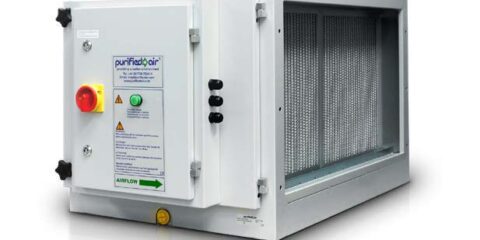
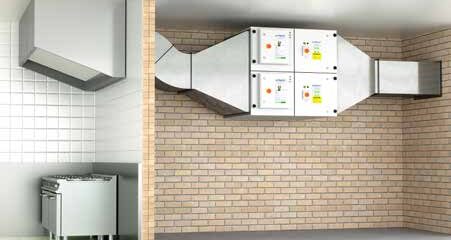
Our Industrial Electrostatic Precipitator (ESP) Units are engineered to deliver outstanding performance in demanding environments, achieving up to 99% particle removal efficiency. Designed with flexibility in mind, these modular units feature an integrated fan system, allowing for versatile installation options. They can be directly mounted onto a machine tool, positioned on a freestanding stand, or connected via a transition duct to exhaust to atmosphere.
These ESPs are purpose-built for industrial applications where efficient removal of airborne contaminants such as oil mist, smoke, and sub-micron particles is critical. Thanks to their compact, energy-efficient design, they offer a reliable and cost-effective solution for improving workplace air quality while keeping operational expenses low.
Key Features of our Industrial ESP Units:
-
Captures particles down to sub-micron levels
-
Independently tested to 99% efficiency
-
Low operating costs due to efficient design
-
Minimal maintenance required for ongoing performance
-
Tailored for heavy-duty industrial use
-
Energy-efficient for reduced power consumption
-
Effectively removes oil, mist, and smoke
-
Compact footprint for easy integration into workspaces
How Industrial Electrostatic Precipitators Work
The below diagram shows, in a basic visual, how an electrostatic precipitator works:

Electrostatic Precipitators use electrostatic attraction to remove particles from the air stream. As contaminated air enters the ioniser/collector cell, the particles are electrically charged (polarised). These charged particles are then repelled by the positively charged plates and attracted to the earthed plates, where they adhere and are removed from circulation.
This non-mechanical filtration method ensures quiet, efficient operation with high particle removal efficiency, making it ideal for manufacturing, machining, and other industrial environments where air quality and cleanliness are paramount.